coco-8300-tin-20h
COCO-8300 in a 68 mm tin, 20 hours
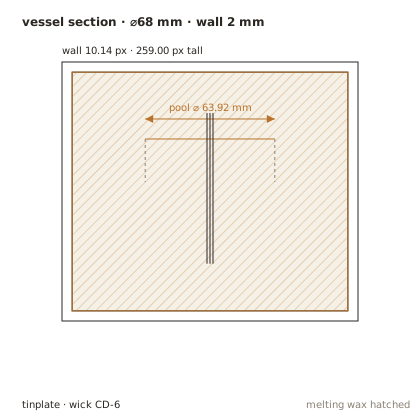
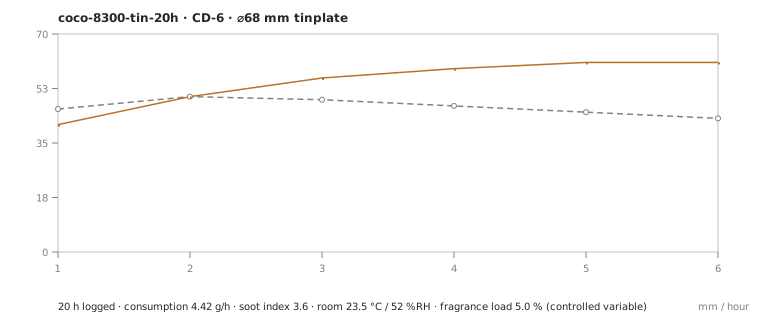
Five sessions with a CD-6 wick at 5 % load, run to establish the baseline the cold-throw panel is calibrated against. The pool reaches 61 mm in a 68 mm tin by hour five, which leaves only 7 mm of unmelted rim: the narrowest margin on the site.
Hourly record
| Hour | Pool ⌀ mm | Flame mm | Pool vs peak | Flame vs peak |
|---|---|---|---|---|
| 1 | 41.0 | 46.0 | ||
| 2 | 50.0 | 50.0 | ||
| 3 | 56.0 | 49.0 | ||
| 4 | 59.0 | 47.0 | ||
| 5 | 61.0 | 45.0 | ||
| 6 | 61.0 | 43.0 |
The near-full pool is what a low-melt wax does. It is not a fault in the wick: a CD-6 is already generous in a 68 mm vessel. It is the reason a pure coconut candle cannot be shipped in summer in a shallow tin, because a 7 mm margin becomes zero the moment the ambient climbs past 28 C.
The cold throw panel scored this record 4 out of 5 in a 5 % load, the highest cold score on the site. The hot throw matched it at 4, and the panel's standard deviation was 0.9, so the result was reported without a spread note.
Vessel section
- Room
- 23.5 °C · 52 %RH
- Fragrance load
- 5.0 %
- Mushrooming
- 2 / 5
- Tunnelling risk
- 2 / 5
- Wet-spot risk
- 3 / 5
- Soot index
- 3.6 / 10
- Throw c/h
- 4 · 4
- Consumption
- 4.42 g/h
Failure modes observed
| Trigger | Threshold | Known failure modes |
|---|---|---|
| BURN-RIM | pool to rim margin → under 10 mm | A 7 mm margin means a knock while lit spills wax. Set the tin on a tray and never move it during a session. |
| BURN-WETSPOT | ambient over 28 C → pool temperature above 62 C | The surface goes glassy and the wick leans. Above 28 C this combination should not be run at all. |
Reading of the record
- P-01 blind cold-throw panelFive-panellist blind sniff panel, trimmed mean of five scores
- COCO-8300Coconut wax · 30.5–34.5 °C