palm-7750-tin-28h
PALM-7750 in a 76 mm glass, 28 hours
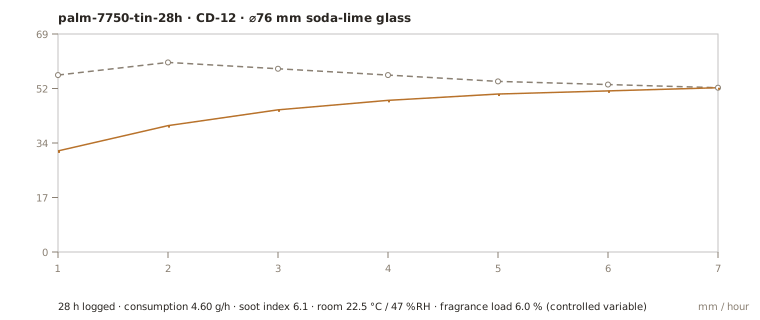
Seven sessions with a CD-12 wick at 6 % load in a 76 mm soda-lime glass, run to measure how the crystalline surface behaves under repeated heating. The feather pattern survived the first three sessions and was gone by the fifth, replaced by a smooth grey skin.
Hourly record
| Hour | Pool ⌀ mm | Flame mm | Pool vs peak | Flame vs peak |
|---|---|---|---|---|
| 1 | 32.0 | 56.0 | ||
| 2 | 40.0 | 60.0 | ||
| 3 | 45.0 | 58.0 | ||
| 4 | 48.0 | 56.0 | ||
| 5 | 50.0 | 54.0 | ||
| 6 | 51.0 | 53.0 | ||
| 7 | 52.0 | 52.0 |
The first three sessions kept the feather, because the remelt only reached the top 8 mm each time. By session five the melt had descended past the patterned zone and the resolidified surface came back smooth. The pattern is therefore a pour-time property, not a permanent one, and it belongs on the pour record rather than in the burn log.
Soot at 6.1 in a 6 % load is consistent with the other heavy-load records here, and the consumption of 4.60 g/h is the highest of the first nine records. A palm candle is a short, bright, scented candle; it is not a long burner.
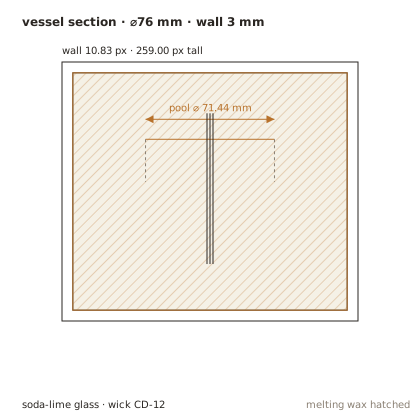
Vessel section
- Room
- 22.5 °C · 47 %RH
- Fragrance load
- 6.0 %
- Mushrooming
- 4 / 5
- Tunnelling risk
- 2 / 5
- Wet-spot risk
- 2 / 5
- Soot index
- 6.1 / 10
- Throw c/h
- 3 · 4
- Consumption
- 4.60 g/h
Failure modes observed
| Trigger | Threshold | Known failure modes |
|---|---|---|
| BURN-SLUG | adhesion → pull-away over 24 % | The wax slug slides inside the glass when it is tilted and can crack the wall. Carry the vessel flat or not at all. |
| BURN-BLOOM | storage → over 70 %RH between sessions | A white bloom appears on the resolidified top between sessions and reads as soot on the photographs. Wrap the vessel between sessions. |
Reading of the record
- P-03 shrinkage by cast cylinderCast steel cylinder, dimensional measurement at three cooling stages
- PALM-7750Palm wax · 56.0–61.0 °C